

Last August, a friend texted me out of the blue.
“Hey Joe, does the name Joe Don Eaves mean anything to you?”
The name did indeed mean something to me, as my home backs up to the JD Ranch - Mr. Eaves’ 1,500+ acre cattle ranch in Inola, OK. I don’t know Mr. Eaves personally and have never met him, but I certainly know his property as I can see it from every part of my yard and most windows inside my home.
My friend went on to tell me a rumor that a data center was being planned for the ranch.
My stomach sank. It was the first time I had heard of it, and if true, it meant that the quiet country life I had thoroughly enjoyed since moving to Inola would be over. No more peace and quiet - just the constant thrum of the data center’s HVAC system. No more beautiful star-filled night skies - just a constant glow from sodium lights around the perimeter of the data center. No more amber waves of hay blowing gently in the breeze from every vantage point on my property - just ugly industrial buildings.
Since then, the subject of Mr. Eaves’ intentions and the proposed sale of his property have percolated throughout the Inola community and I’ve heard a variety of theories. “He’s selling, it’s going to be a data center” - that one was obvious. Another Inola resident told me, “he’s selling to developers who want to turn Inola into the next Owasso - it’s going to be mixed use residential and commercial.” Bad, but not as bad as a data center. Then, “He decided not to sell, he’s keeping the property.” I didn’t get my hopes up.
Last Thursday, the facts started to emerge.
First up, the deeds, which were recorded earlier this month:
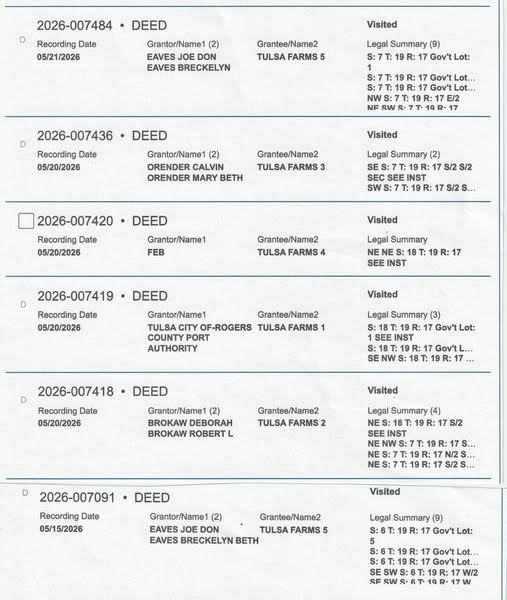
These deeds confirm that a series of shell companies titled “Tulsa Farms” bought a series of properties from my back yard to the northern boundary of the port of Inola, and west to east from 4190 Road and 4200 Road - approximately 2 miles long and 1 mile wide. The following, outlined in red, is my best guess at what these Tulsa Farms entities now own:
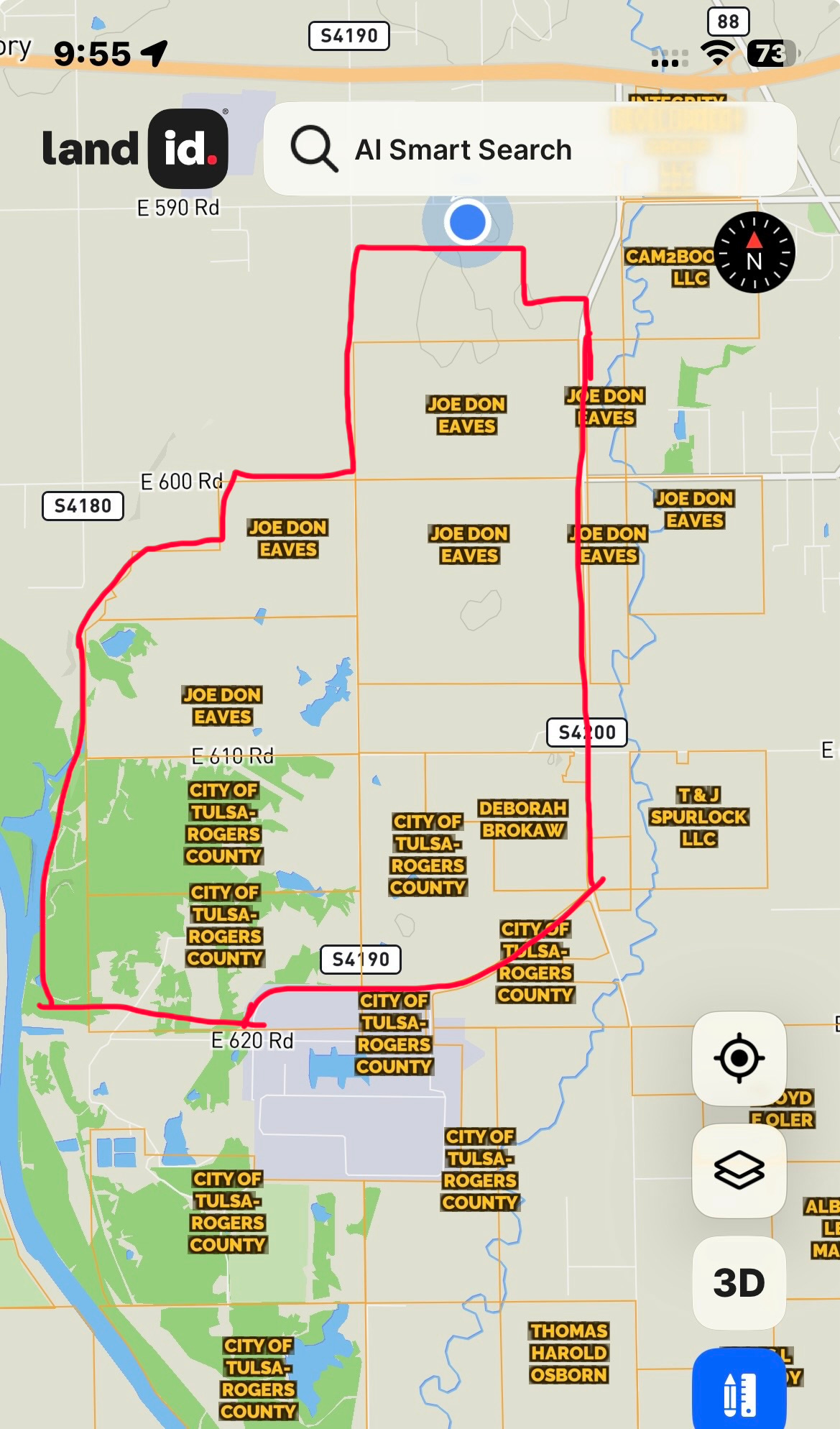
That blue dot at the top is me, sitting at my desk in my office.
I feel the need to say I’m not a NIMBY activist. I understand the need for development, and I understand that data is the lifeblood of human activity these days. I wrote this article on a computer using a data center, the article is hosted at a data center, the research done for this article accessed data in data centers. I have no specific animosity towards a data center.
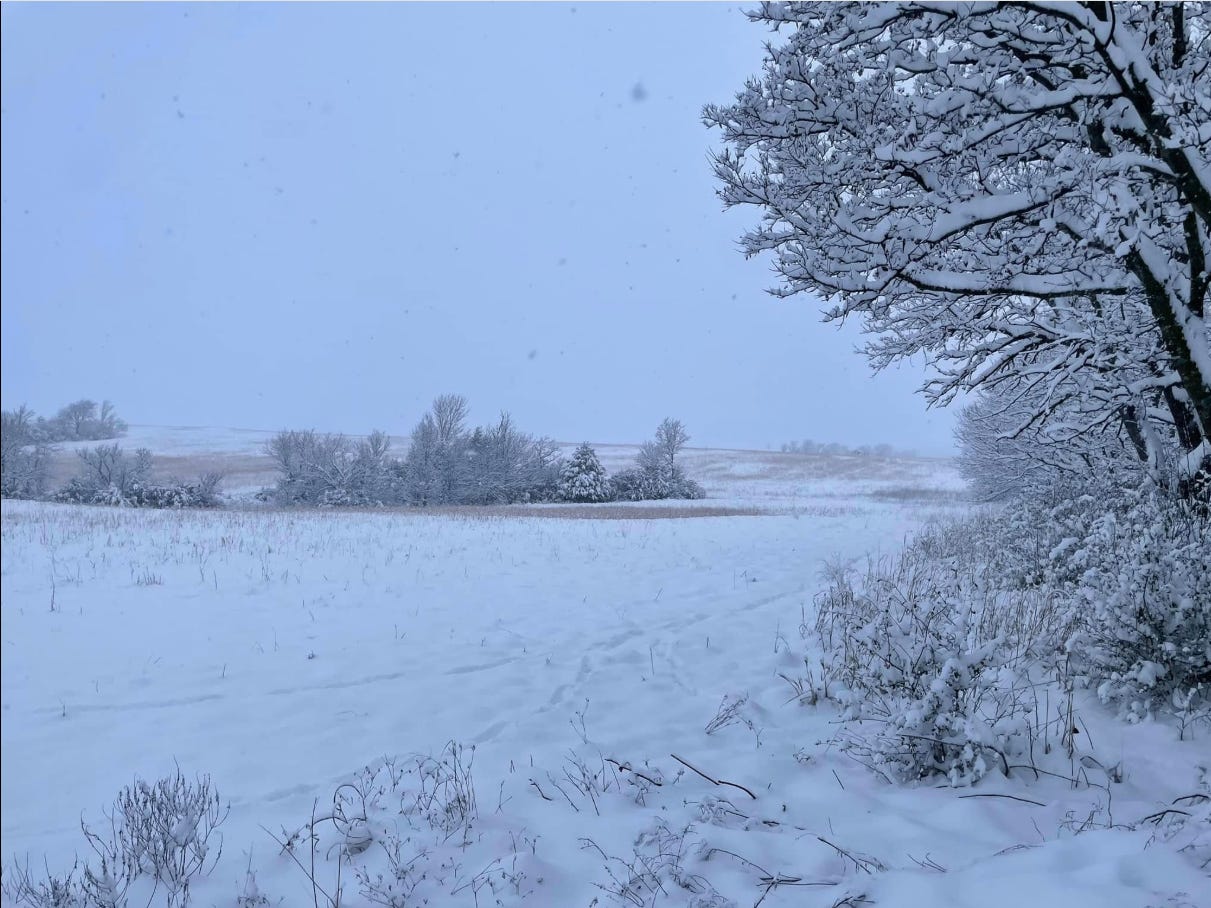
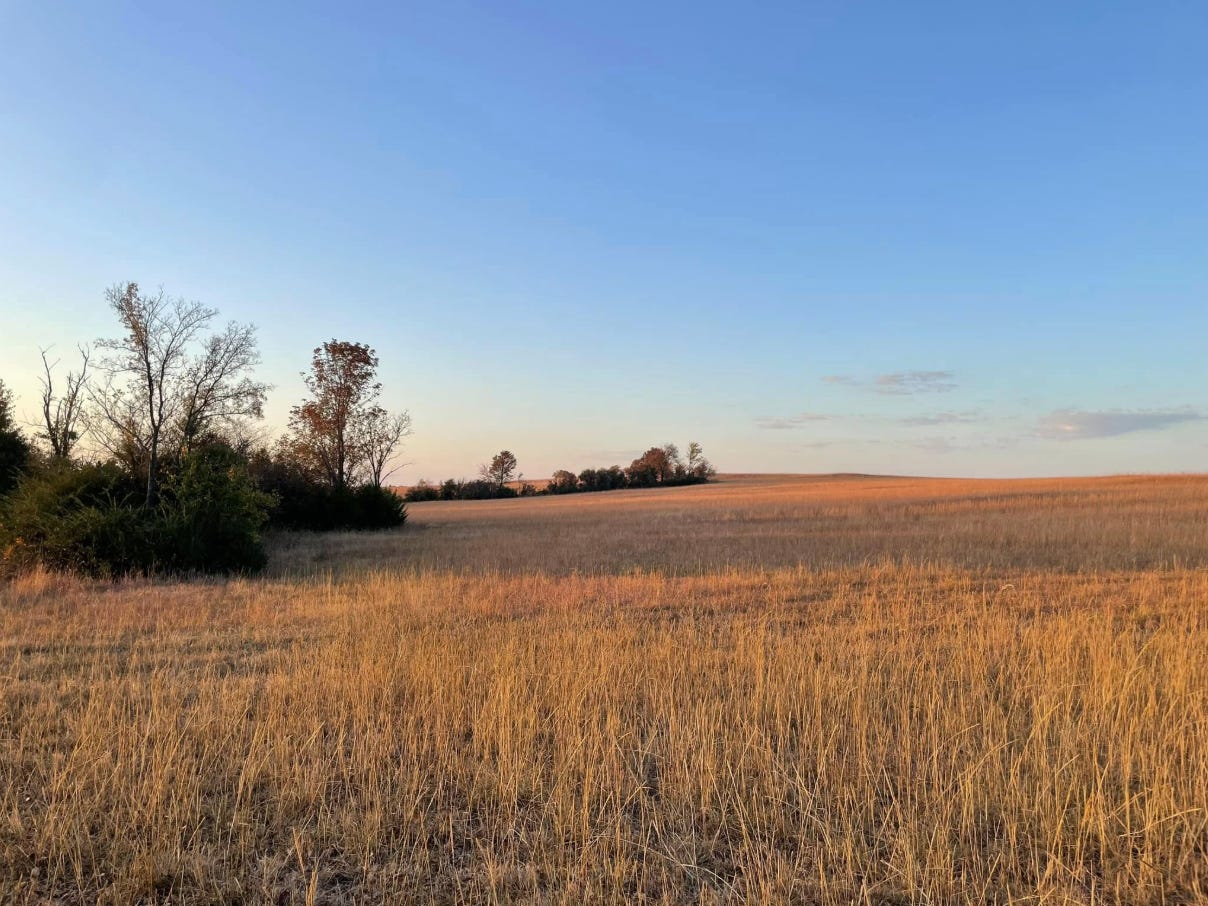
But it takes a profound blindness to local heritage and natural beauty to look at a property as stunning as the JD Ranch and conclude that its ‘highest and best use’ is a massive block of concrete and HVAC systems.
Anyway, my neighbor did some sleuthing after the deeds were recorded. He’s a whiz with AI, and was able to figure out that the main signatory on all of the deeds was a “Richard McCrea”, and that Mr. McCrea is the CEO of a company called Potentia, Inc.
Potentia’s website does indeed give some clues about plans for a data center in Oklahoma:
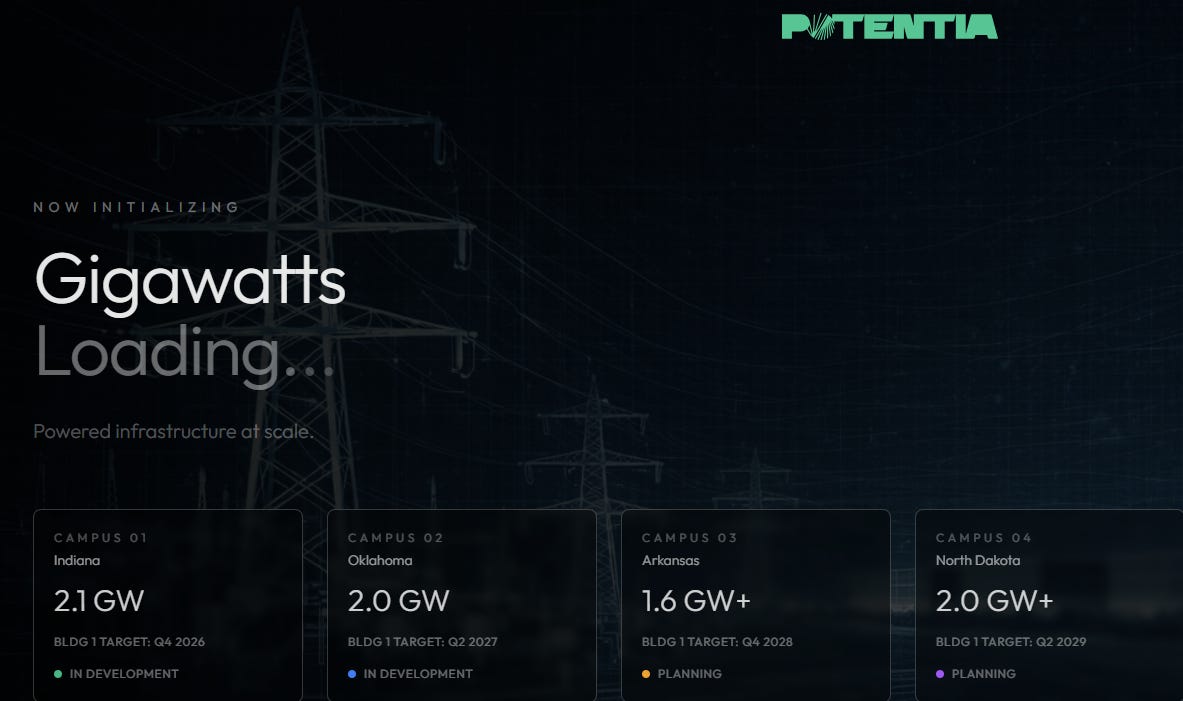
Note the second block on the bottom from the left, which states that Campus 02 in Oklahoma is in development, with a building 1 target date of the second quarter of 2027 - approximately one year from today.
A click on the Oklahoma block reveals a few more details:
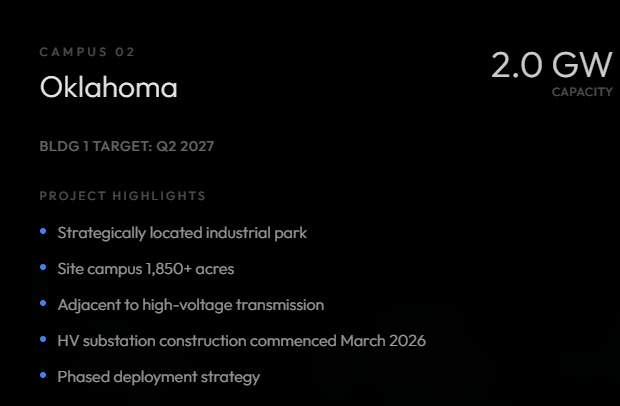
This all tracks. The JD Ranch was 1,500 acres +/- and the other properties would take it to the 1,850 listed.
“Adjacent to high voltage transmission” tracks - there are power lines running to the Sofidel factory at the Port of Inola adjacent to the JD Ranch.
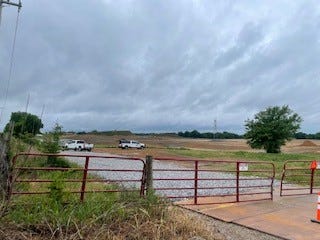
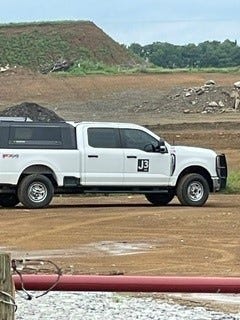
And “HV substation construction” also tracks. There is indeed a large construction project going on at the southern end of 4190 Rd. Trucks at the construction site bear the logo of J3 Company, which bills itself as “Serving clients for over 20 years focused around site work, civil and public works, farm and ranch, and energy construction services.”
Finally, the May agenda for the Tulsa Port of Authority - Rogers County board meeting lists “Second Amendment to Purchase Agreement - Potentia Tulsa 1 LLC” as an agenda item (see item 12 in linked agenda).
So, those facts line up and point to Potentia as the buyer.
Potentia recently announced a massive project in Indiana, the Heartland Industrial Park. The linked press release provides all of the usual investment and job creation statistics that serve as catnip for the politicos who approve projects like this. I was interested to read this line: “Potentia has not sought or received any tax abatements, and the park’s full assessed value will flow to local schools and services from day one.”
That’s appealing—especially considering the bitter taste left in the mouths of locals after Oklahoma legislators inexplicably handed a UAE-headquartered aluminum company a 25-year, $545 million tax abatement for a smelter at the Port of Inola. While nobody locally wants that project (a travesty you can read more about at stoptheinolasmelter.com), Potentia is at least claiming they will pay their share into the local community from day one. But that’s where the comfort ends.
The numbers that Potentia throws around for its Heartland Industrial Park are eye-popping. $65 billion in investment. $65 billion!!! Surely this must be a huge, established company with lots of heft behind it.
It’s not.
From what I can gather, the company was just incorporated approximately two years ago, in 2024. It has four employees on LinkedIn (yes, 4):
As noted in the press release linked above, the company’s CEO is a gentleman named Richard McCrea. This triangulates with research by my AI-whiz-neighbor, who noted that Mr. McCrea is the signatory on all of the deeds. In addition, the address listed on the deeds for the “Tulsa Farms” entities is a residence in The Woodlands, TX, and property records indicate the owner is yet another shell company, which is in turn owned by Mr. McCrea and his wife Natalie.
Again, for a project of this magnitude, one would expect a leader with incredible gravitas. And maybe Mr. McCrea is just that, but online, he’s a ghost.
No LinkedIn bio.
No fancy pictures of McCrea and his wife at charity events.
No wedding announcements.
No…anything!
I was able to find a few press releases where he was quoted:
In 2021, McCrea was quoted in a press release by a company called “Solvenz”, touting a new insurance program for oil & gas operators. His title: Managing Director of Risk Analysis and Valuation.
By 2024, Solvenz had pivoted to data centers. McCrea, now serving as Director of North America Operations, was quoted in a press release touting Solvenz’s data center energy efficiency.
In 2021, insurance. Three years later in 2024, data centers. That’s not exactly an intuitive pivot: “We know how to sell insurance. You know what we should do? Build data centers!!!”
Then, in April 2026 McCrea shows up again, now at Potentia, as CEO, in the previously-mentioned press release announcing the Heartland Industrial Park project.
And so, this brings me to my biggest concern.
Who owns Inola now (well, owns it for all intents and purposes)? A series of shell companies tied to a data center development company that was formed just a few years ago, that has never actually built a data center, that has very few employees, a headquarters in a residential home in Texas, and no prior track record of success in anything at all.
Led by a CEO who has no online presence at all.
So if this all goes wrong and the project is a disaster, or promises to the community are not kept - who’s accountable?
There’s no reputation to protect - for either the company or its CEO.
There are no assets to go after. This company doesn’t even have a headquarters. And judging by the use of shell companies for everything from land acquisition to personal home ownership, even if assets were found they are likely buried in a tangled web.
And yet…this small company just purchased nearly 2,000 acres of land for a rumored $80 million. Which begs the question: who really is behind the project?
I’m sure the community, when it gets wind of this, will be ready to fight. But the Inola community is already fighting one battle against the previously-mentioned aluminum smelter. Resources are stretched thin.
And I suspect the battle is already lost. Potentia wrote a (rumored) $80 million check for land that is mostly not zoned for a data center (I’m guessing the land it acquired from the Tulsa Port Authority is likely already zoned commercial - but that the land acquired from Eaves, Orender, and Brokaw is zoned either agricultural or residential).
I asked AI about the process for the zoning change, and the answer was further concerning (Author’s note: again - I fully acknowledge the irony of writing this article about a data center with AI’s help):
Under Oklahoma state statutes and Rogers County/Inola municipal planning laws, changing zoning from agricultural to industrial requires a strict public process. The developer cannot bypass this, and it is your primary window of opportunity.
However, developers have a playbook to minimize neighborhood backlash during this process, and there is one massive loophole you need to be aware of.
The Standard Public Notice Process
For a standard rezoning request, the county planning commission or city council must legally do three things:
Mail Direct Notices: They are required to mail written notices directly to all adjacent property owners within a specific radius (usually 300 feet) of the property boundary. Because your home backs up directly to the ranch, you must receive a letter.
Publish in Local Newspapers: They must publish a legal notice of the upcoming hearing in a newspaper of general circulation in the county at least 15 to 20 days before the meeting.
Post Physical Signs: They must place physical, bright-colored public hearing signs along the roadways bordering the property (such as 4190 and 4200 Roads).
The Developer’s Playbook: How They Skew the Process
While they cannot avoid the hearings, seasoned developers like Potentia manipulate the timing and scope of the hearings to catch communities off guard.
1. The Friday Night/Holiday Rush
Developers frequently submit their final rezoning requests right before a holiday weekend or during mid-summer when residents are traveling. They hope the notices arrive when people are distracted, resulting in low attendance at the public planning commission meeting.
2. The Loophole: “By-Right” Zoning or Annexation
This is the most critical factor for the Inola site. One of the parcels was sold by the Tulsa City of-Rogers County Port Authority.
The Port of Inola is a massive industrial park. If the JD Ranch land is adjacent to the Port, the developer might try to bypass county residential protections entirely using one of these two methods:
Annexation: The developer may petition the City of Inola or request the Port Authority to legally annex the ranch land into the industrial port’s footprint. If the land becomes part of an existing industrial district, the zoning rules change instantly.
“By-Right” Use: If any portion of that land was already quietly zoned for light industrial or open commercial use years ago, a data center might be considered a “by-right” use. If it’s a by-right use, they only need standard building permits—which do not require public hearings.
With $80 million at stake, my suspicion is that one of these latter strategies is afoot.
The next meeting of the Port Authority’s board is June 18 at 9:00 AM. No agenda has been posted yet. As a community, we will have to watch this carefully.
I messaged one of the Potentia execs on LinkedIn to find out when their plans will be made public. I will update this post accordingly as more information is revealed.